
Molecule counting in STORM

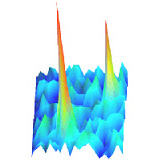
We developed a novel methodology to count the number of molecules in a STORM image. That allowed us to address the stoichiometry of adhesion proteins in focal adhesions. It appeared that the stoichiometry in FAK is independent on the force exerted by the cell.

Substrate rigidity modulates traction forces and stoichiometry of cell–matrix adhesions.

Hayri E. Balcioglu, Rolf Harkes, Erik H. J. Danen, and Thomas Schmidt.

In cell–matrix adhesions, integrin receptors and associated proteins provide a dynamic coupling of the extracellular matrix (ECM) to the cytoskeleton. This allows bidirectional transmission of forces between the ECM and the cytoskeleton, which tunes intracellular signaling cascades that control survival, proliferation, differentiation, and motility. The quantitative relationships between recruitment of distinct cell–matrix adhesion proteins and local cellular traction forces are not known. Here, we applied quantitative super-resolution microscopy to cell–matrix adhesions formed on fibronectin-stamped elastomeric pillars and developed an approach to relate the number of talin, vinculin, paxillin, and focal adhesion kinase (FAK) molecules to the local cellular traction force. We find that FAK recruitment does not show an association with traction-force application, whereas a ∼60 pN force increase is associated with the recruitment of one talin, two vinculin, and two paxillin molecules on a substrate with an effective stiffness of 47 kPa. On a substrate with a fourfold lower effective stiffness, the stoichiometry of talin:vinculin:paxillin changes to 2:12:6 for the same ∼60 pN traction force. The relative change in force-related vinculin recruitment indicates a stiffness-dependent switch in vinculin function in cell–matrix adhesions. Our results reveal a substrate-stiffness-dependent modulation of the relationship between cellular traction-force and the molecular stoichiometry of cell–matrix adhesions.

doi: 10.1063/5.0077004

Posted in News, Publications | Leave a comment

From molecule to tissue.

Cell-cell and cell-matrix interactions are governed by interactions between individual molecules. But how does a tissue emerge from those localized and individual events? In this review we summarize our current understanding.

Holding it together: when cadherin meets cadherin

Arslan, F. N., J. Eckert, T. Schmidt, and C. P. Heisenberg

Intercellular adhesion is the key to multicellularity, and its malfunction plays an important role in various developmental and disease-related processes. Although it has been intensively studied by both biologists and physicists, a commonly accepted definition of cell-cell adhesion is still being debated. Cell-cell adhesion has been described at the molecular scale as a function of adhesion receptors controlling binding affinity, at the cellular scale as resistance to detachment forces or modulation of surface tension, and at the tissue scale as a regulator of cellular rearrangements and morphogenesis. In this review, we aim to summarize and discuss recent advances in the molecular, cellular, and theoretical description of cell-cell adhesion, ranging from biomimetic models to the complexity of cells and tissues in an organismal context. In particular, we will focus on cadherin-mediated cell-cell adhesion and the role of adhesion signaling and mechanosensation therein, two processes central for understanding the biological and physical basis of cell-cell adhesion.

doi: 10.1016/j.bpj.2021.03.025

Posted in News, Publications | Leave a comment

Rick joined the team – welcome!

Rick joined our team as PhD student to investigate the role of mechanics and forces in metastasis. The project is embedded in a research program sponsored by an NWO EW-groot grant.

Characterization of the Role of Cellular Forces in Cancer Metastases.

Genetic programs driving metastasis of solid tumors vary between cancer types and even between people carrying the same cancer type. Nevertheless, the ultimate outcome is shared: cancer cells are empowered to pass a series of physical hurdles to escape the original tumor and disseminate to other organs. Accumulating evidence suggests that metastasis in most cases involves collective cell behavior whereby cell clusters pass these hurdles more successfully than individual cancer cells. This collective advantage is not understood. In recent years, “active matter” has emerged as a new paradigm to describe collective behavior across length scales: from bird flocks down to artificial self-propelled particles. This paradigm was recently found to describe cellular collectivity in biological processes like embryonic development and wound healing with surprising accuracy. We will develop and experimentally test a new theoretical framework based on concepts from active matter physics to understand how the collective behavior of cancer cells drives the early stages of metastasis. Multiscale theoretical models will be combined with in vitro and in vivo experimental biology and biophysics to unravel how motile clusters originate and dissociate from the primary tumor; how they navigate the mechanically complex environment as they invade surrounding tissues; and how they enter the blood stream to spread to distant organs. Our program identifies the key physical determinants of the early steps leading to systemic metastasis, providing new handles for rational design of future cancer therapy targeting principles shared across solid tumors.

The PhD project will be involved in two of the main questions:
How do clusters form and dissociate? We study active unjamming of cells inside the primary tumor and the detachment of cell clusters, taking into account 3D extracellular matrix (ECM) confinement. This objective will provide us with insights in the mechanisms that control the emergence of cell clusters and set their initial shape and size distribution.
How do clusters intravasate? We study the impact of elastic and fluid stresses that cell clusters encounter as they traverse the vessel wall (intravasation). We will determine the relation between intravasation efficiency, cluster size and deformability, and investigate how entry into the vessel breaks up cell clusters. This objective will deliver a predictive understanding of how these processes set the size distribution, viability, and stability of metastatic cell clusters in the blood stream.

Posted in Member, News | Leave a comment

Pericyte mechanics.

Olga’s paper appeared in Stem Cell Reports, reporting on the particular mechanoresponse of pericytes, that might be related to their function.

Fibronectin Patches as Anchoring Points for Force Sensing and Transmission in Human Induced Pluripotent Stem Cell-Derived Pericytes.

Pericytes (PCs) have been reported to contribute to the mechanoregulation of the capillary diameter and blood flow in health and disease. How this is realized remains poorly understood. We designed several models representing basement membrane (BM) in between PCs and endothelial cells (ECs). These models captured a unique protein organization with micron-sized FN patches surrounded by laminin (LM) and allowed to obtain quantitative information on PC morphology and contractility. Using human induced pluripotent stem cell-derived PCs, we could address mechanical aspects of mid-capillary PC behavior in vitro. Our results showed that PCs strongly prefer FN patches over LM for adhesion formation, have an optimal stiffness for spreading in the range of EC rigidity, and react in a non-canonical way with increased traction forces and reduced spreading on other stiffness then the optimal. Our approach opens possibilities to further study PC force regulation under well-controlled conditions.

Posted in News, Publications, Research | Leave a comment

Cells in Hypergravity .

Ever wondered how cells react when you fly them at 20g? Indeed they change their mechanical and other properties. This experiment, driven by Julia, is a ramp-up to our experiment flying on ISS.

Hypergravity affects Cell Traction Forces of Fibroblasts
J. Eckert, J. J.W.A. van Loon, L. M. Eng, T. Schmidt

Cells sense and react on changes of the mechanical properties of their environment, and likewise respond to external mechanical stress applied to them. Whether the gravitational field, as overall body force, modulates cellular behavior is however unclear. Different studies demonstrated that micro- and hypergravity influences the shape and elasticity of cells, initiate cytoskeleton reorganization, and influence cell motility. All these cellular properties are interconnected, and contribute to forces that cells apply on their surrounding microenvironment. Yet, studies that investigated changes of cell traction forces under hypergravity conditions are scarce. Here we performed hypergravity experiments on 3T3 fibroblast cells using the Large Diameter Centrifuge at the European Space and Technology Centre (ESA-ESTEC). cells were exposed to hypergravity of up to 19.5g for 16 h in both the upright and the inverted orientation with respect to the g-force vector. We observed a decrease in cellular traction forces when the gravitational field was increased up to 5.4g, followed by an increase of traction forces for higher gravity fields up to 19.5g independent of the orientation of the gravity vector. We attribute the switch in cellular response to shear-thinning at low g-forces, followed by significant rearrangement and enforcement of the cytoskeleton at high g-forces.

doi: 10.1016/j.bpj.2021.01.021

Posted in Member, News, Publications, Research | Leave a comment

Mechanics of Cancer granted .

Our NWO-EW Groot program grant was granted. In this program we seek for a physical understanding of the processes involved in metastases. The dream would be that such understanding might lead to novel intervention strategies.

Genetic programs driving metastasis of solid tumors vary between cancer types and even between people carrying the same cancer type. Nevertheless, the ultimate outcome is shared: cancer cells are empowered to pass a series of physical hurdles to escape the original tumor and disseminate to other organs. Accumulating evidence suggests that metastasis in most cases involves collective cell behavior whereby cell clusters pass these hurdles more successfully than individual cancer cells. This collective advantage is not understood but in recent years, “active matter” has emerged as a new paradigm to describe collective behavior across length scales: from bird flocks down to artificial self-propelled particles. This paradigm was recently found to describe cellular collectivity in biological processes like embryonic development and wound healing with surprising accuracy. In our program, we will develop and experimentally test a new theoretical framework based on concepts from active matter physics to understand how the collective behavior of cancer cells drives the early stages of metastasis. Multiscale theoretical models will be combined with in vitro and in vivo experimental biology and biophysics to unravel how motile clusters originate and dissociate from the primary tumor; how they navigate the mechanically complex environment as they invade surrounding tissues; and how they enter the blood stream to spread to distant organs. Our program identifies the key physical determinants of the early steps leading to systemic metastasis, providing new handles for rational design of future cancer therapy targeting principles shared across solid tumors.

Groups involved: Danen (LU), Friedl (RUMC), Giomi (UL), Janssen (TUe), Koenderink (TUD), de Roij (UMC), Schmidt (UL), den Toonder (TUe)

Posted in Funding, News, Research | Leave a comment

Cecilia and Alessandro – welcome .

Cecilia and Alessandro started their PhD on a collaborative project funded by the Dutch Cancer Research Foundation (KWF) together with the groups of Elisa Giovannetti (VUmc), and Eric Danen (LACDR).

Integrative mechanobiology and genomics profiling of resistance patterns to foster novel therapeutics in pancreatic cancer.

Pancreatic ductal adenocarcinoma (PDAC) is a highly lethal disease that is notoriously chemoresistant. Despite extensive genetic mapping, the identification of specific subtypes, and the realization that the tumor microenvironment, including desmoplasia, contributes to chemoresistance, the clinical perspective for PDAC patients remains grim. Tumors have been described to mechanically alter their microenvironment, for instance through extracellular-matrix (ECM) stiffening, which in turn drives survival and growth of tumor cells. Interestingly, PDAC is extremely rich in ECM suggesting that such a positive feedback loop is highly relevant in this context. Indeed, recent reports implicate biomechanical aspects of PDAC-stroma interactions in PDAC progression. We were able to further substantiate and extend those observations. Our new findings suggest that the force-transducing cell adhesion signaling machinery (integrins, FAK/Src) contributes to the chemoresistant phenotype of PDAC.

In this project, we will investigate how PDAC cells stiffen their environment and how this in turn affects growth and chemoresistance of cells, unravel the underlying molecular machinery that leads to mechano-chemical feedback, and identify new targets to interfere with this process for the development of new therapeutic strategies.

Cecilia and Alessandro – welcome to the team!

Posted in News | Leave a comment

Hemidesmosome mechanics, JCB 219, e201904137

Wang, W., A. Zuidema, L. te Molder, L. Nahidiazar, L. Hoekman, T. Schmidt, S. Coppola, and A. Sonnenberg. 2020. Hemidesmosomes modulate force generation via focal adhesions. The Journal of Cell Biology 219(2).
[DOI]

Abstract
Hemidesmosomes are specialized cell-matrix adhesion structures that are associated with the keratin cytoskeleton. Although the adhesion function of hemidesmosomes has been extensively studied, their role in mechanosignaling and transduction remains largely unexplored. Here, we show that keratinocytes lacking hemidesmosomal integrin α6β4 exhibit increased focal adhesion formation, cell spreading, and traction-force generation. Moreover, disruption of the interaction between α6β4 and intermediate filaments or laminin-332 results in similar phenotypical changes. We further demonstrate that integrin α6β4 regulates the activity of the mechanosensitive transcriptional regulator YAP through inhibition of Rho–ROCK–MLC– and FAK–PI3K–dependent signaling pathways. Additionally, increased tension caused by impaired hemidesmosome assembly leads to a redistribution of integrin αVβ5 from clathrin lattices to focal adhesions. Our results reveal a novel role for hemidesmosomes as regulators of cellular mechanical forces and establish the existence of a mechanical coupling between adhesion complexes.

Posted in Publications | Leave a comment

Brillouin Imaging: BOE 5, 2202 –

Coppola, S., T. Schmidt, G. Ruocco, and G. Antonacci. 2019. “Quantifying cellular forces and biomechanical properties by correlative micropillar traction force and Brillouin microscopy”. Biomed. Opt. Express 10(5):2202-2212.
[DOI] [pdf]

Cells sense and respond to external physical forces and substrate rigidity by regulating their cell shape, internal cytoskeletal tension, and stiffness. Here we show that the combination of micropillar traction force and noncontact Brillouin microscopy provides access to cell-generated forces and intracellular mechanical properties at optical resolution. Actin-rich cytoplasmic domains of 3T3 fibroblasts showed significantly higher Brillouin shifts, indicating a potential increase in stiffness when adhering on fibronectin-coated glass compared to soft PDMS micropillars. Our findings demonstrate the complementarity of micropillar traction force and Brillouin microscopy to better understand the relation between cell force generation and the intracellular mechanical properties.

Posted in Publications | Leave a comment

First Person: Veer Keizer –

Interview with Veer on GR mobility in JCS.

Posted in Member, News | Leave a comment