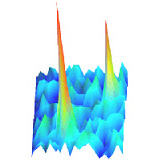
Ever wanted to know about the mechanical stress inside and around a tumor? Here are the experiments.

Matrix stiffness affects spheroid invasion, collagen remodeling and the effective reach of stress into the ECM.

Klara Beslmüller, Rick Rodrigues de Mercado, Gijsje H. Koenderink, Erik H.J. Danen, Thomas Schmidt

The extracellular matrix (ECM) provides structural support to cells thereby forming a functional tissue. In cancer, the growth of the tumor creates an internal mechanical stress which, together with remodeling activity of tumor cells and fibroblasts, alters the ECM structure leading to an increased stiffness of the pathological ECM. The enhanced ECM stiffness in turn stimulates tumor growth, activates tumor-promoting fibroblasts and tumor cell migration, leading to metastasis and an increased therapy resistance. The connection between internal tumor stress, ECM stiffness, ECM remodeling, and cell migration are unresolved. Here we used 3D ECM-embedded spheroids and hydrogel-particle stress sensors, to quantify and correlate internal tumor-spheroid pressure, ECM stiffness, ECM remodeling, and tumor cell migration. 4T1 breast cancer spheroids and SV80 fibroblast spheroids showed increased invasion – described by area, complexity, number of branches and branch area – in a stiffer, cross-linked ECM. On the other hand, changing the ECM stiffness only minimally changed the radial alignment of fibers but highly changed the amount of fibers.. For both cell types, the pressure measured in spheroids gradually decreased as the distance into the ECM increased. For 4T1 spheroids, increased ECM stiffness resulted in a further reach of mechanical stress into the ECM which, together with the invasive phenotype, was reduced by inhibition of ROCK-mediated contractility. By contrast, such correlation between ECM stiffness and stress-reach was not observed for SV80 spheroids. Our findings connect ECM stiffness with tumor invasion, ECM remodeling, and the reach of tumor-induced mechanical stress into the ECM. Such mechanical connections between tumor and ECM are expected to drive early steps in cancer metastasis.

bioRxiv 2025/643241: [DOI]

Posted in News, Publications, Research | Leave a comment

Parvin joined the team.

Parvin joined the team as PhD student. Parvin will develop a sensitive Raman microscope to follow the differentiation of stem cells in a label-free fashion. Welcome Parvin!

Posted in Member, News | Leave a comment

Paper on MechanoBiology of Chemoresistance.

Alessandro’s and Cecilia’s paper in which they investigated how chemoresistance modulates the mechanical phenotype of cells.


Altered Mechanobiology of PDAC Cells with Acquired Chemoresistance to Gemcitabine and Paclitaxel.

Alessandro Gregori, Cecilia Bergonzini, Mjriam Capula, Rick Rodrigues de Mercado, Erik H. J. Danen, Elisa Giovannetti and Thomas Schmidt.

Background: Pancreatic ductal adenocarcinoma (PDAC) acquired resistance to chemotherapy poses a major limitation to patient survival. Despite understanding of some biological mechanisms of chemoresistance, much of those mechanisms remain to be uncovered. Mechanobiology, which studies physical properties of cells, holds promise as a potential target for addressing challenges of chemoresistance in PDAC. Therefore, we here in an initial step, assessed the altered mechanobiology of PDAC cells with acquired chemoresistance to gemcitabine and paclitaxel.
Methods: Five PDAC cell lines and six stably-resistant subclones were assessed for force generation on elastic micropillar arrays. Those measurements of mechanical phenotype were complemented by single-cell motility and invasion in collagen matrix were investigated using 2D models and 3D extracellular matrix-mimetic, respectively. Further the nuclear translocation of Yes-associted protein (YAP), as a measure of active mechanical status, was compared, and biomarkers of the epithelial-to-mesenchymal transition (EMT) were evaluated using RT-PCR.
Results: PDAC cells with acquired chemoresistance exert higher traction forces than their parental/wild-type (WT) cells. In 2D, single-cell motility was altered for all chemoresistant cells, with a cell-type specific pattern. In 3D, spheroids of chemoresistant PDAC cells were able to invade the matrix, and remodel collagen more than their WT clones. However, YAP nuclear translocation and EMT were not significantly altered in relation to changes in other physical parameters.
Conclusion: This is the first study to investigate and report on the altered mechanobiological features for PDAC cells that have acquired chemoresistance. A better understanding of mechanical features could help in identifying future targets to overcome chemoresistance in PDAC.

to be read: bioRxiv 2024.04.10.588671

Posted in News, Publications | Leave a comment

Nasrin joined the team.

Nasrin will built a Raman u-scope that let’s us follow cell differentiation. Welcome!

Posted in Member, News | Leave a comment

Elisa joined for her internship.

Elisa joined from Florence for her MSc internship. Welcome!

Posted in Member, News | Leave a comment

Series of papers on PDAC

A series of three papers appeared this week in which we contributed towards therapeutic strategies in pancreatic cancer. A nice summary of results from our collaborative efforts ongoing for quite some years. That all those were accepted within one week we take as encouragement for our ongoing collaborations. Congrats to Alessandro, Cecilia, Ginevra & Stefano. Also thanks to our collaborators for the endeavor: Annarosa, Elisa and Erik.


“Integrins regulate hERG1 dynamics by girdin-dependent Gαi3: signaling and modeling in cancer cells.”

Duranti, C., J. Iorio, G. Bagni, G. C. Altadonna, T. Fillion, M. Lulli, F. N. D’Alessandro, A. Montalbano, E. Lastraioli, D. Fanelli, S. Coppola, T. Schmidt, F. Piazza, A. Becchetti and A. Arcangeli.

The hERG1 potassium channel is aberrantly over expressed in tumors and regulates the cancer cell response to integrin-dependent adhesion. We unravel a novel signaling pathway by which integrin engagement by the ECM protein fibronectin promotes hERG1 translocation to the plasma membrane and its association with β1 integrins, by activating girdin-dependent Gαi3 proteins and protein kinase B (Akt). By sequestering hERG1, β1 integrins make it avoid Rab5-mediated endocytosis, where unbound channels are degraded. The cycle of hERG1 expression determines the resting potential (Vrest) oscillations and drives the cortical f-actin dynamics and thus cell motility. To interpret the slow biphasic kinetics of hERG1/β1 integrin interplay, we developed a mathematical model based on a generic balanced inactivation–like module. Integrin-mediated cell adhesion triggers two contrary responses: a rapid stimulation of hERG1/β1 complex formation, followed by a slow inhibition which restores the initial condition. The protracted hERG1/β1 integrin cycle determines the slow time course and cyclic behavior of cell migration in cancer cells.

to be read in: Life Science Alliance (2023) 7:e202302135.


“Differential sensitivity to ionizing radiation in gemcitabine- and paclitaxel-resistant pancreatic cancer cells.”

Che, P. P., A. Gregori, C. Bergonzini, M. Ali, G. Mantini, T. Schmidt, F. Finamore, S. M. F. Rodrigues, A. E. Frampton, L. A. McDonnell, E. H. Danen, B. J. Slotman, P. Sminia and E. Giovannetti.

Chemoresistance remains a major challenge in treating pancreatic ductal adenocarcinoma (PDAC). While chemoradiation has proven effective in other tumor types, such as head-and-neck squamous cell carcinoma, its role in PDAC and its impact on acquired chemoresistance have yet to be fully explored. In this study, we investigated the sensitivity of gemcitabine- and paclitaxel-resistant PDAC cells to ionizing radiation (IR) and their underlying mechanisms. Gemcitabine-resistant (GR) and paclitaxel-resistant (PR) clones were generated from PANC-1, PATU-T and SUIT2-007 pancreatic cancer cell lines. Cell survival after radiation was assessed using clonogenic assay, SRB assay, apoptosis and spheroid growth by bioluminescence while radiation-induced DNA damage was evaluated with Western blot, XL-PCR, ROS production and immunofluorescence. Autophagy and modulation of Hippo pathway were investigated using proteomics, Western blot, immunofluorescence and RT-qPCR. In both 2D and 3D settings, PR cells were more sensitive to IR and showed decreased β-globin amplification indicating more DNA damage accumulation as compared to GR or wild-type (WT) cells after 24 hours. Proteomics analysis of PATU-T PR revealed that the protein MST4, a kinase involved in autophagy and Hippo signaling pathway, was highly downregulated. Differential association was found between autophagy and radiation treatment depending on the cell model. Interestingly, increased YAP nuclear localization and downstream Hippo pathway target gene expression were observed in in SUIT2-007 PR cells in response to IR, as compared to WT and GR. This is the first study investigating the potential of IR in targeting PDAC cells with acquired chemoresistance. Our results demonstrate that PR cells exhibit enhanced sensitivity to IR due to greater accumulation of DNA damage. Additionally, depending on the specific cellular context, radiation-induced modulation of autophagy and the Hippo pathway emerged as potential underlying mechanisms, and these findings have the potential to inform personalized treatment strategies for patients with acquired chemoresistance.

to be read in: J Rad Oncology (2023) nn:nnnn.


“ABCB1 overexpression through locus amplification represents an actionable target to combat paclitaxel resistance in pancreatic cancer cells.”

Cecilia Bergonzini, Alessandro Gregori, Tessa M.S. Hagens, Vera E. van der Noord, Bob van de Water, Annelien J.M. Zweemer, Mjriam Capula, Giulia Mantini, Asia Botto, Francesco Finamore, Ingrid Garajova, Liam A. McDonnell, Thomas Schmidt, Elisa Giovannetti, Erik H.J. Danen.

Chemotherapies such as gemcitabine/nab-paclitaxel are confronted with intrinsic or acquired resistance in pancreatic ductal adenocarcinoma (PDAC). We aimed to identify novel actionable mechanisms to overcome such resistance.Three paclitaxel (PR) and gemcitabine resistant (GR) PDAC models were established. Transcriptomics and proteomics were used to identify conserved mechanisms of drug resistance. Genetic and pharmacological approaches were used to overcome paclitaxel resistance. Upregulation of ABCB1 through locus amplification was identified as a conserved feature unique to PR cells. ABCB1 was not affected in any of the GR models and no cross resistance was observed. The ABCB1 inhibitor verapamil or siRNA mediated ABCB1 depletion sensitized PR cells to paclitaxel and prevented efflux of ABCB1 substrates in all models. ABCB1 expression was detected in PDAC patients that had received gemcitabine/nab-paclitaxel treatment. A pharmacological screen identified known and novel kinase inhibitors that attenuate efflux of ABCB1 substrates and sensitize PR PDAC cells to paclitaxel. Upregulation of ABCB1 through locus amplification represents a novel, conserved mechanism of PDAC paclitaxel resistance. ABCB1 has not been previously implicated in PR PDAC. The synthetic lethal interactions identified in this study can be further (pre)clinically explored as therapeutic strategies to overcome paclitaxel resistance in PDAC.

to be read in: J Exp & Clinical Cancer Res. (2023) nn:nnnn.

Posted in News, Publications | Tagged | Leave a comment

Opening for PhD Student .

We have an opening for a
PhD candidate on “Raman Sensing of Cell Differentiation”

Project description
The project addresses a challenge in the development of stem-cell based therapies and personalized medicine: fast and non-disruptive quality control of cell cultures. It has been shown that Raman spectroscopy is uniquely able to resolve various cell states with minimal impact on cell physiology. The drawback of classical Raman microscopy though is its low signal rendering data acquisition extremely slow. In this project Raman spectroscopy will be supplemented by a compressed-sensing scheme which alleviates this major disadvantage, ultimately permitting to use the technique even for high-throughput applications, such as drug screening.

You will develop a novel microscopy setup that optically implements a programmable compressed sensing scheme. Simultaneously you will develop a machine-learning platform to determine the optimal parameters of the optical elements. You will characterize the setup quantitatively and apply the methodology to a variety of cell models including immune cells and stem cells. In your endeavour you will be supported by a team of biophysicists with ample experience in imaging, from individual molecules to organoids, all in the context of cells and tissue. Our group is embedded in the Cell Observatory, whichn facilitates our collaborative research with groups from biology and drug development.

Key responsibilities

  • Design, build, optimize and characterize the compressed-sensing Raman microscope;
  • Realize a deep-learning platform for optimization of the compressed-sensing scheme;
  • Publish academic papers and present your findings at academic conferences;
  • Communicate closely with the team members and collaborators in biology;
  • Assist with teaching and student supervision;
  • Complete a PhD thesis within four years (1.0 FTE).

The PhD candidate will work closely together with the two PIs (prof T. Schmidt, www.schmidtlab.nl; and prof S. Semrau, www.semraulab.com) driving the project, and the other team members of the group. The candidate will carry responsibility for the research goals within the project.

Selection Criteria

  • Research Master in Physics, Engineering or equivalent;
  • Knowledge in optics and optical techniques is a plus;
  • Excellent command of the English language, and excellent communication skills;
  • Well-developed analytic and organisational skills;
  • Excellent social skills in order to be able to work in a team of varied background.

Applications
To apply for this vacancy, please send an email to Thomas Schmidt (schmidt@physics.leidenuniv.nl), with ‘Application PhD’ in the subject line. Please ensure that you attach the following:

  • A short motivation (max one page) on why you would like to join our group and about your research interests;
  • A Curriculum Vitae, including information about the grades you had as an undergraduate;
  • Contact details of a university teacher or previous/current supervisors who can be contacted for a reference.

Applications will be reviewed starting 1st of November until the position is filled. The starting date of the PhD program is at the beginning of 2024.

Download the full ad HERE.

Posted in Member, News | Leave a comment

Paper on hexanematic order appeared in Nature Comm.

“Hexanematic crossover in epithelial monolayers depends on cell adhesion and cell density”

Julia Eckert, Benoît Ladoux, René-Marc Mège, Luca Giomi & Thomas Schmidt

Changes in tissue geometry during developmental processes are associated with collective migration of cells. Recent experimental and numerical results suggest that these changes could leverage on the coexistence of nematic and hexatic orientational order at different length scales. How this multiscale organization is affected by the material properties of the cells and their sub- strate is presently unknown. In this study, we address these questions in monolayers of Madin-Darby canine kidney cells having various cell densities and molecular repertoires. At small length scales, confluent monolayers are characterized by a prominent hexatic order, independent of the presence of E- cadherin, monolayer density, and underlying substrate stiffness. However, all three properties affect the meso-scale tissue organization. The length scale at which hexatic order transits to nematic order, the “hexanematic” crossover scale, strongly depends on cell-cell adhesions and correlates with monolayer density. Our study demonstrates how epithelial organization is affected by mechanical properties, and provides a robust description of tissue organiza- tion during developmental processes.

To be read in: Nat Comm 14, 5762

Congrats to Julia!

Posted in News, Publications | Leave a comment

Rick won LION image award


With his high-res image of two interacting tumor spheroids, Rick won the 2022 LION image award. We will see his image on one of the next official documents of the institute.

Read the news item here.

Posted in Member, News | Tagged | Leave a comment

Integrin as prognostic marker

Integrin alpha-2 popped up in a screen of aggressive and chemoresistant PDAC cancers. In this study of Alessandro and Cecilia we validated the results we obtained in the RNA screen with various methods. Again we find a correlation between cell mechanics, aggressiveness, and chemoresistance. More to come …

Prognostic Significance of Integrin Subunit Alpha 2 (ITGA2) and Role of Mechanical Cues in Resistance to Gemcitabine in Pancreatic Ductal Adenocarcinoma (PDAC).

Gregori, A.; Bergonzini, C.; Capula, M.; Mantini, G.; Khojasteh-Leylakoohi, F.; Comandatore, A.; Khalili-Tanha, G.; Khooei, A.; Morelli, L.; Avan, A.; Danen, E.H.; Schmidt, T.; Giovannetti, E.

Pancreatic ductal adenocarcinoma (PDAC) is an aggressive and chemoresistant cancer, with a poor overall survival. The stiff stroma surrounding PDAC is known to be involved in chemoresistance via mechanical cues, although the mechanisms behind it are poorly understood. Here, we investigated whether integrin alpha 2 (ITGA2), a mechanical sensor of stiffness, correlated with poor prognosis and whether matrix stiffness could trigger chemoresistance to gemcitabine. By assessing two cohorts of patients, we observed a poorer prognosis for the high ITGA2 expression group. An increase in matrix stiffness prompted cancer cells to express more ITGA2 and become chemoresistant. ITGA2 might therefore be an interesting therapeutic target to overcome resistance to gemcitabine.

Cancers (2023) 15:628 (doi:10.3390/cancers15030628)

Posted in News, Publications | Leave a comment